Understanding Your Rating
Every player on ServeLeague has a rating, a single number that reflects your competitive strength. It updates automatically after each session, giving you an objective measure of how you're performing over time.
What Are Ratings For?
Ratings serve two main purposes:
- Fair matchups: your organiser can use ratings to create balanced groups and divisions, so you play against others of similar ability.
- Progress tracking: your rating trend over a season shows whether you're improving, plateauing, or need to adjust your practice.
ServeLeague tracks three types of rating:
- Singles: based on your one-on-one matches
- Doubles: based on your doubles/pairs play
- Merit: rewards consistent attendance and participation
Finding Your Rating
Your current ratings appear on your player profile. If you've claimed your profile, you can access it from the top-right menu. You can also find any player's rating on the league standings page.
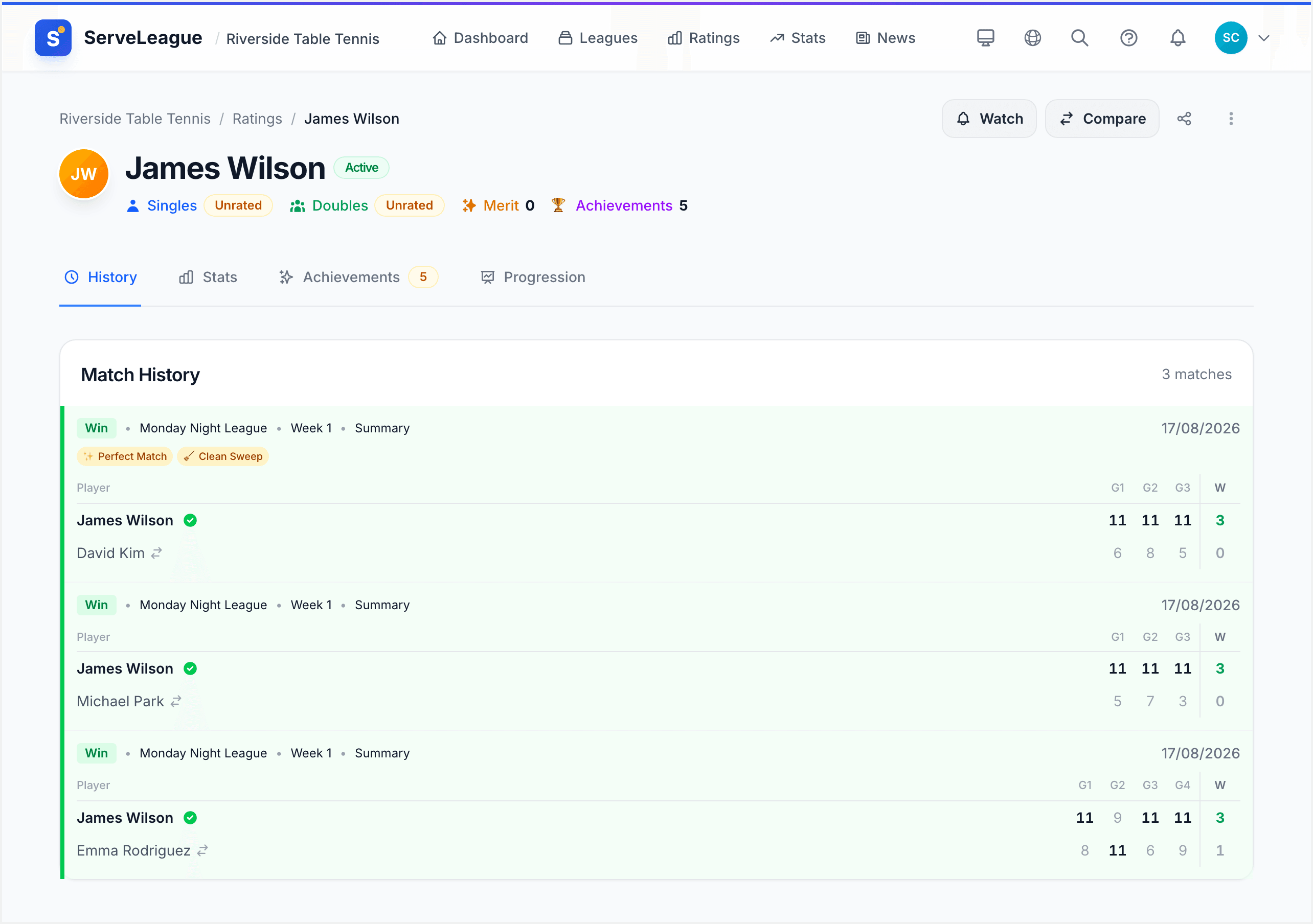
If you're new and haven't played enough matches yet, your rating shows as "Unrated". You'll remain unrated until you've played enough qualifying matches, then your organiser assigns your starting rating based on the system's recommendation.
How Your Rating Changes After a Session
After each finalized session, you can see exactly how your rating changed. Go to the session results page and find your name. You'll see rating change cards showing the adjustment for each type.
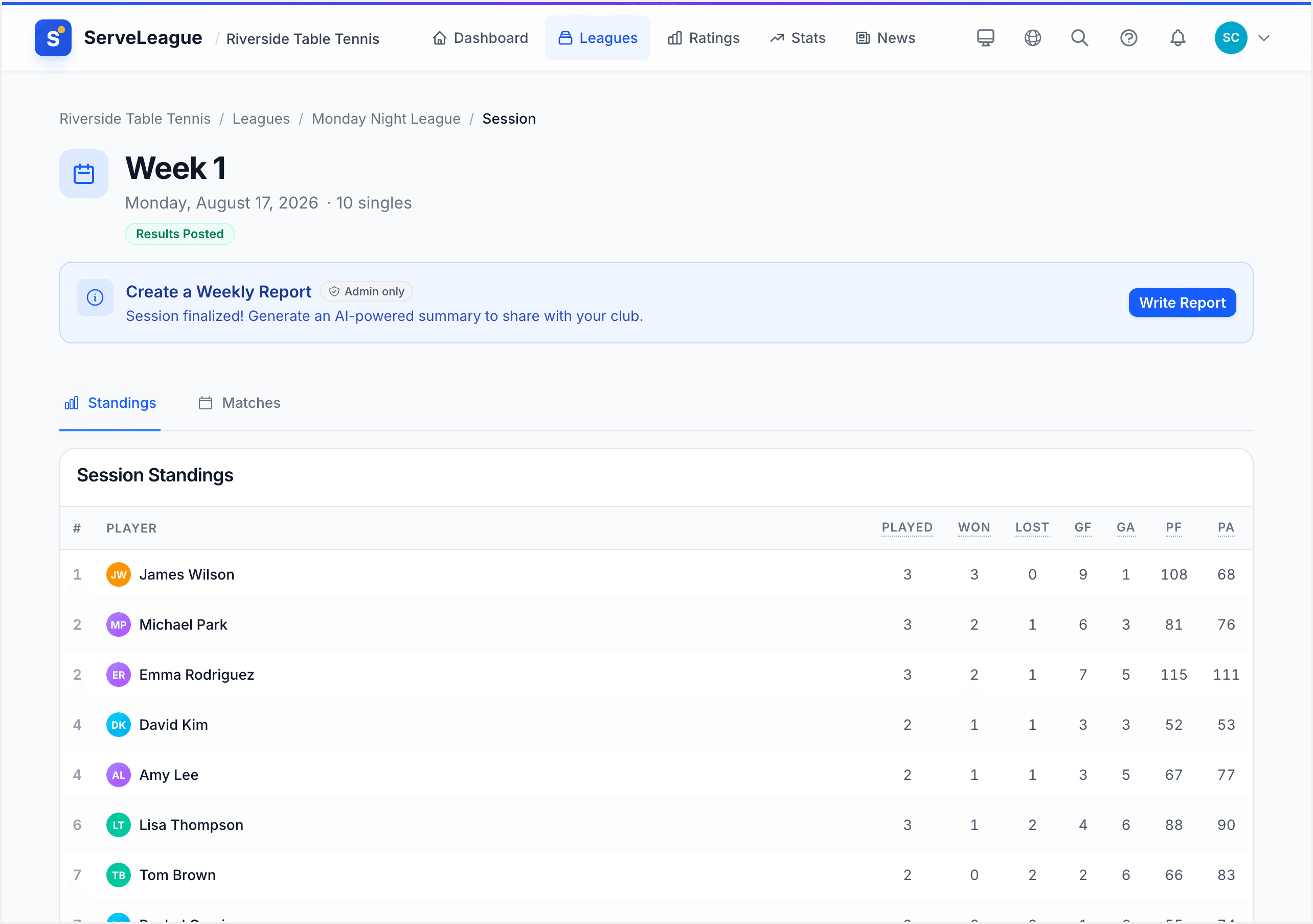
- Green = your rating went up
- Red = your rating went down
For a detailed breakdown of how each match contributed, tap "Rating breakdown":
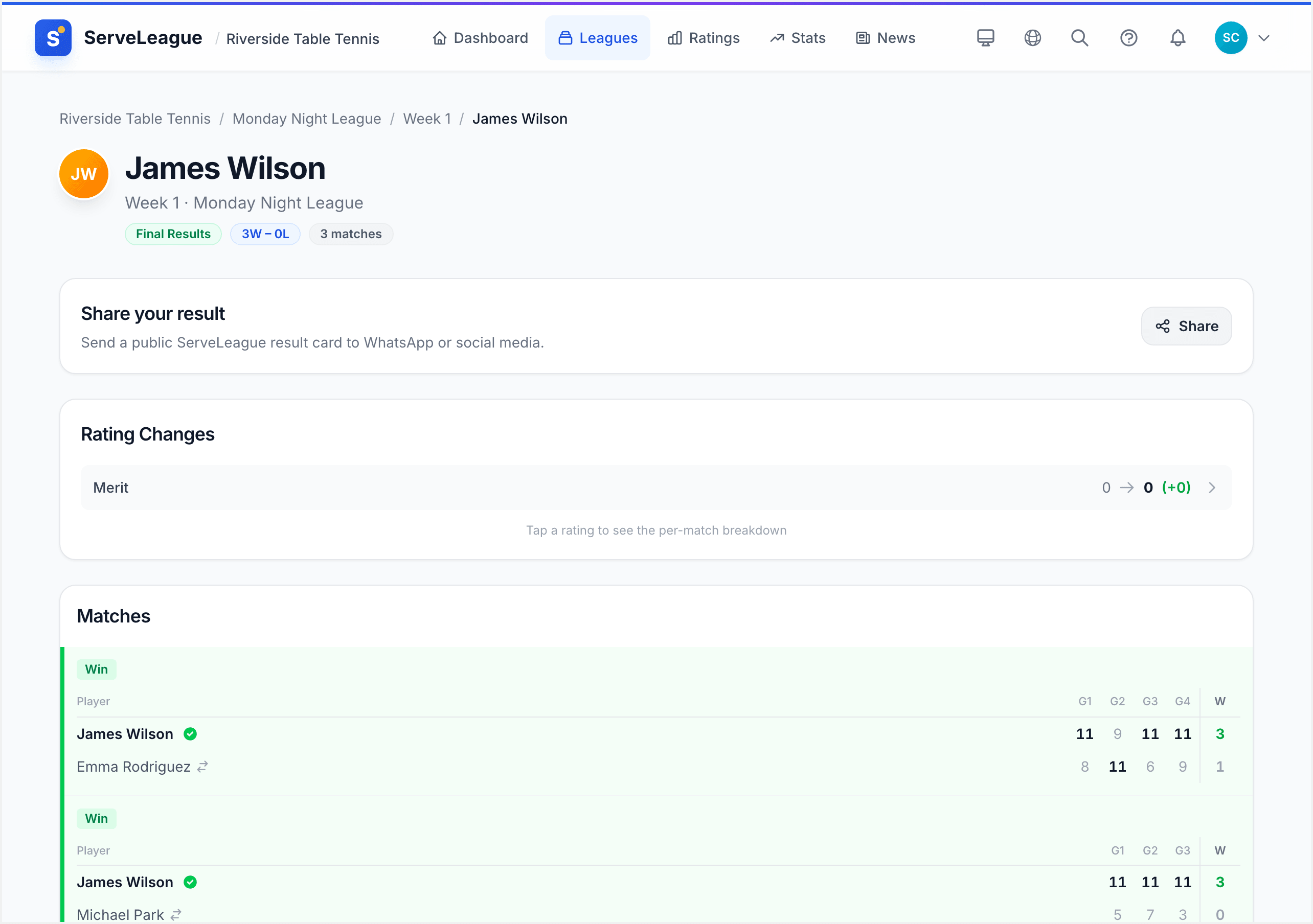
This shows each match, your opponent's rating, and how many points you gained or lost from that specific result.
[!TIP] Don't worry about small session-to-session drops. Focus on the trend over multiple sessions. A steady climb over a season means you're genuinely improving.
How Ratings Are Calculated
When two players complete a match, the rating change depends on the gap between their ratings:
- Close matchup (ratings within ~25 points): both players gain or lose a similar amount.
- Expected win (higher-rated player wins): a small change. Winning matches you're expected to win doesn't move the needle much.
- Upset (lower-rated player wins): a bigger swing. The underdog is rewarded for beating a stronger opponent.
What This Means for You
- Beating someone rated much higher gives a big boost
- Losing to someone rated much lower costs more points
- Playing more matches makes your rating more stable and accurate
- New players' ratings move faster at first, then stabilize
[!NOTE] Ratings are tracked per club, not per league. All rated leagues within the same club contribute to the same Singles, Doubles, and Merit ratings. Fun leagues with "Affects Ratings" turned off don't change your rating. If you play at multiple clubs, each club tracks independent ratings.
Tracking Your Progress
Your player profile has a Progression tab with a line chart of your rating over time. Use the time range buttons (1m, 3m, 6m, 1y, All) to zoom in on specific periods.
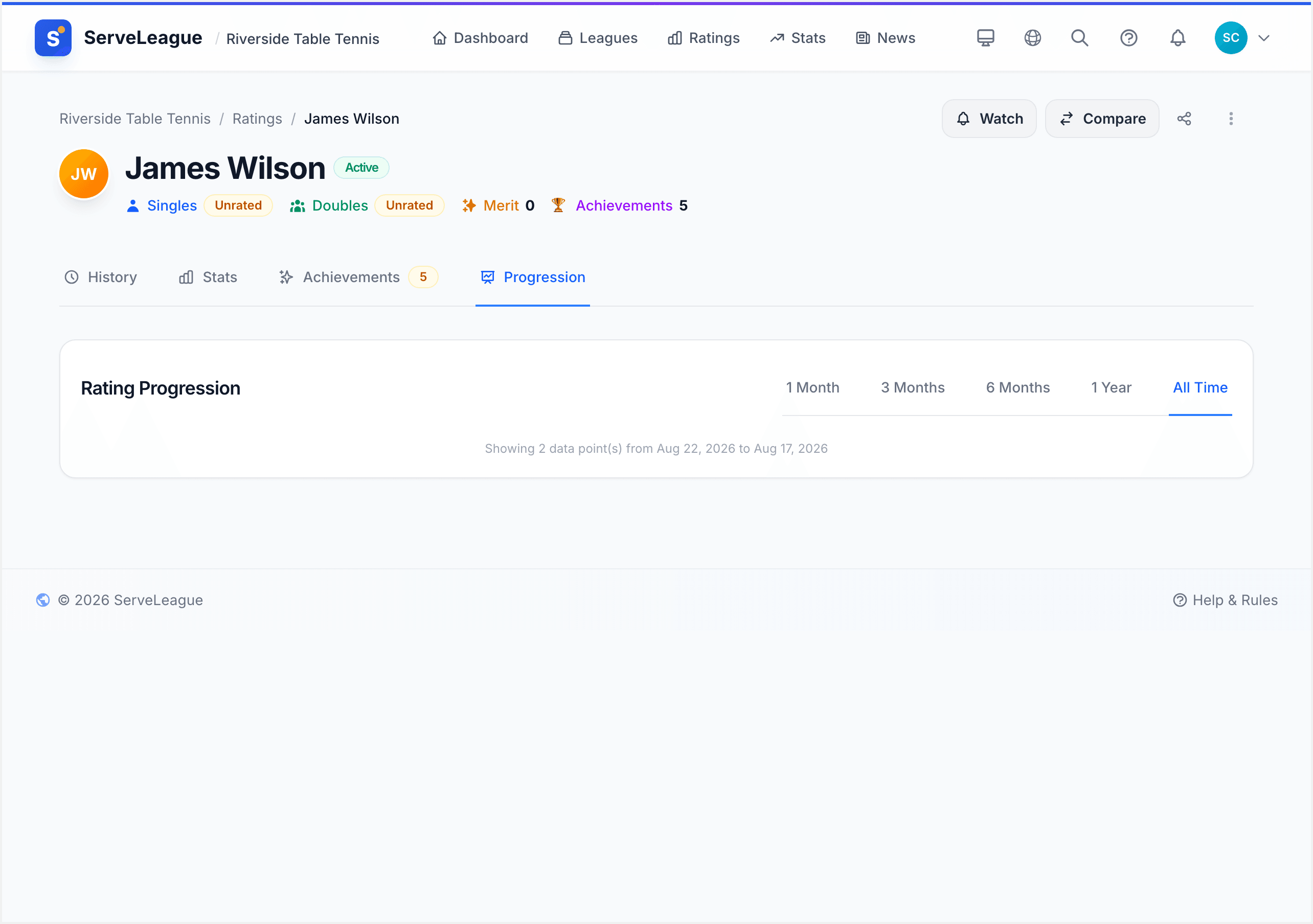
What to look for:
- Upward trend: you're improving, even if individual sessions dip
- Volatility: large swings suggest inconsistent performance or too few matches
- Plateau: your rating has stabilized at your current level (this is normal)
Making the Most of Your Rating
- Set a target: aim for a specific rating by the end of the season
- Review session-by-session: use the History tab to spot which sessions had the biggest impact
- Check achievements: milestones reward rating gains, win streaks, and other accomplishments
- Play regularly: ratings become more accurate with more data
What's Next?
- Your Player Profile: explore your full stats dashboard
- Comparing Players: head-to-head rivalry stats
- Achievements and Milestones: badges for rating milestones and streaks